Come visit us at our new location! 13433 West Highway 72 in Hiwasse Arkansas

Close
×

Would you like to switch to the accessible version of this site?

Go to accessible site Close modal window

Don't need the accessible version of this site?

Hide the accessibility button Close modal window
Accessibility View Close toolbar

(479) 855-9944

BELLA VISTA ANIMAL HOSPITAL

Bella Vista

Animal Hospital

Menu
  • Home
  • New Patient Center
    • Online Forms
    • What To Expect
    • Veterinary Resources
    • Payment Options
  • Services
  • About Us
    • Meet Our Team
    • Tour
  • Employment
  • Testimonials
  • Contact Us
    • Appointment Request
  • Pet Selector
  • Blog
  • Veterinary Topics
    • Pet Health
      • Chronic Conditions
      • Digestive and Oral Health
      • Diseases and Viruses
      • Pests and Parasites
      • Orthopedics
    • Today's Veterinarian
    • Choosing Your Pet
      • Finding Your Pet
      • Cats
      • Dogs
      • Horses
      • Exotics
        • Amphibians
        • Birds
        • Reptiles
          • Lizards
          • Turtles
      • Small Mammals
        • Ferrets
        • Rabbits
        • Domesticated Animals
          • Prairie Dogs
        • Pocket Pets
          • Chinchillas
          • Guinea Pigs
          • Hamsters
          • Hedgehogs
          • Rats
      • Livestock
        • Cows
        • Donkeys, Horses & Mules
        • Goats
        • Pigs
        • Poultry
        • Sheep
    • Living With Your Pet
      • Bringing Your Pet Home
      • Children and Pets
      • Providing Care
      • Travel
      • Saying Goodbye
    • Newsletter Library
      • Cats
      • Tips for Pet Owners
      • Behavior & Training
      • Fleas & Parasites
      • Keeping Pets Healthy
      • Equine
      • Recognizing Illness
      • Nutrition & Food
      • Pet Dangers
      • Seasonal Topics
      • Visiting the Vet
      • Newsletter Archive
        • Fun with Pets
        • Unbelievable Pets
    • Video Newsroom
      • Health Topics
      • Technology and Science
      • Other Interests
    • Newsletter Library
    • Client Survey
    • Pets4Kids
    • Equine
  • Home >
  • Articles >
  • Equine >
  • Pet Health >
  • Diseases and Viruses >
  • Equine Motor Neuron Disease

Equine Motor Neuron Disease

  • Created in Equine, Pet Health, Diseases and Viruses

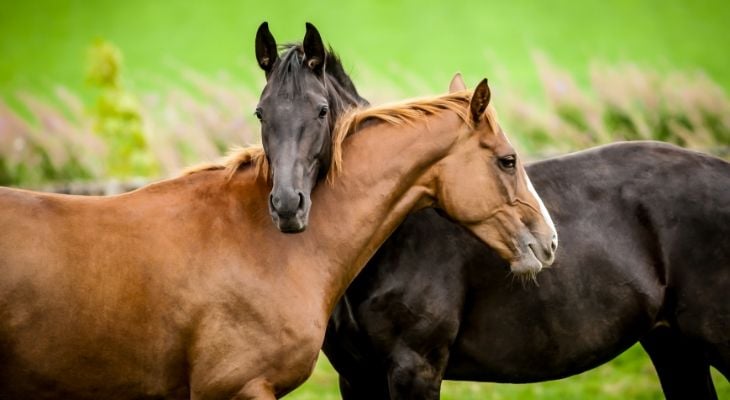
two horses embracing
This relatively new disease was first diagnosed in 1990 in the state of New York. It’s still a rare condition and mostly confined to the United States.

Symptoms

Horse owners might first notice that their horse is eating plenty, but still managing to lose a lot of weight. He might have a short gait, anxious attitude and / or elevated heart rate. Here are some other symptoms:

  • Twitching muscles
  • All-over weakness
  • Sweating
  • “Camped under,” or tucked stance
  • Low head carriage and high tail carriage
  • Constant weight shifting and movement

The condition typically worsens over a period of one to three months, with occasional plateaus and even short spurts of improvement. Muscle atrophy sets in, and the horse becomes progressively debilitated.

Cause and Risk Factors

Researchers have not yet zeroed in on the cause of EMND. Many — but not all — horses with the disease are deficient in vitamin E. Quarter Horses and Thoroughbreds are more likely to develop EMND than other breeds, but this might be related to management practices.

Horses housed at one location for more than 18 months, and those with little or no pasture, form the majority of horses with EMND. These horses usually eat concentrate grain and grass hay.

Diagnosis

Equine veterinarians diagnose horses with EMND using a combination of clinical signs and tests. A muscle biopsy taken from the tailhead will reveal characteristic lesions caused by specific motor nerves that have been damaged. Blood tests often reveal low levels of vitamin E and mildly elevated levels of two muscle enzymes in horses with EMND: aspartate aminotransferase and creatine kinase.

Treatment

Horses with EMND need special care. If the disease is severe, encourage them to rest in deep bedding and provide green forage. Less severely affected horses should get access to a pasture. Talk to your equine veterinarian about adding a vitamin E supplement to your horse’s feed. For best absorption, buy natural, rather than synthetic, vitamin E.

The prognosis for horses with EMND is often grim. Many deteriorate so severely that equine veterinarians euthanize them within a month of the onset of symptoms. Others improve after moving to a new stable and taking vitamin supplements. Some survive but remain atrophied.

If your horse is showing any signs of EMND, call us today. For the best possible prognosis, immediate intervention is critical.

  • Pet Health
    • Chronic Conditions
    • Digestive and Oral Health
    • Diseases and Viruses
    • Pests and Parasites
    • Orthopedics
  • Today's Veterinarian
  • Choosing Your Pet
    • Finding Your Pet
    • Cats
    • Dogs
    • Horses
    • Exotics
      • Amphibians
      • Birds
      • Reptiles
        • Lizards
        • Turtles
    • Small Mammals
      • Ferrets
      • Rabbits
      • Domesticated Animals
        • Prairie Dogs
      • Pocket Pets
        • Chinchillas
        • Guinea Pigs
        • Hamsters
        • Hedgehogs
        • Rats
    • Livestock
      • Cows
      • Donkeys, Horses & Mules
      • Goats
      • Pigs
      • Poultry
      • Sheep
  • Living With Your Pet
    • Bringing Your Pet Home
    • Children and Pets
    • Providing Care
    • Travel
    • Saying Goodbye
  • Newsletter Library
    • Cats
    • Tips for Pet Owners
    • Behavior & Training
    • Fleas & Parasites
    • Keeping Pets Healthy
    • Equine
    • Recognizing Illness
    • Nutrition & Food
    • Pet Dangers
    • Seasonal Topics
    • Visiting the Vet
    • Newsletter Archive
      • Fun with Pets
      • Unbelievable Pets
  • Video Newsroom
    • Health Topics
    • Technology and Science
    • Other Interests
  • Newsletter Library
  • Client Survey
  • Pets4Kids
  • Equine

NEW PATIENTS RECEIVE $20 OFF FIRST EXAM

Fill out and submit information below to print offer

Office Hours

Main Office

Monday:

7:00 am-6:00 pm

Tuesday:

7:00 am-6:00 pm

Wednesday:

7:00 am-6:00 pm

Thursday:

7:00 am-6:00 pm

Friday:

7:00 am-6:00 pm

Saturday:

Closed

Sunday:

Closed

Our Locations

new

new
  • Copyright © 2026 MH Sub I, LLC dba iMatrix.
  • Admin Log In