Come visit us at our new location! 13433 West Highway 72 in Hiwasse Arkansas

Close
×

Would you like to switch to the accessible version of this site?

Go to accessible site Close modal window

Don't need the accessible version of this site?

Hide the accessibility button Close modal window
Accessibility View Close toolbar

(479) 855-9944

BELLA VISTA ANIMAL HOSPITAL

Bella Vista

Animal Hospital

Menu
  • Home
  • New Patient Center
    • Online Forms
    • What To Expect
    • Veterinary Resources
    • Payment Options
  • Services
  • About Us
    • Meet Our Team
    • Tour
  • Employment
  • Testimonials
  • Contact Us
    • Appointment Request
  • Pet Selector
  • Blog
  • Veterinary Topics
    • Pet Health
      • Chronic Conditions
      • Digestive and Oral Health
      • Diseases and Viruses
      • Pests and Parasites
      • Orthopedics
    • Today's Veterinarian
    • Choosing Your Pet
      • Finding Your Pet
      • Cats
      • Dogs
      • Horses
      • Exotics
        • Amphibians
        • Birds
        • Reptiles
          • Lizards
          • Turtles
      • Small Mammals
        • Ferrets
        • Rabbits
        • Domesticated Animals
          • Prairie Dogs
        • Pocket Pets
          • Chinchillas
          • Guinea Pigs
          • Hamsters
          • Hedgehogs
          • Rats
      • Livestock
        • Cows
        • Donkeys, Horses & Mules
        • Goats
        • Pigs
        • Poultry
        • Sheep
    • Living With Your Pet
      • Bringing Your Pet Home
      • Children and Pets
      • Providing Care
      • Travel
      • Saying Goodbye
    • Newsletter Library
      • Cats
      • Tips for Pet Owners
      • Behavior & Training
      • Fleas & Parasites
      • Keeping Pets Healthy
      • Equine
      • Recognizing Illness
      • Nutrition & Food
      • Pet Dangers
      • Seasonal Topics
      • Visiting the Vet
      • Newsletter Archive
        • Fun with Pets
        • Unbelievable Pets
    • Video Newsroom
      • Health Topics
      • Technology and Science
      • Other Interests
    • Newsletter Library
    • Client Survey
    • Pets4Kids
    • Equine
  • Home >
  • Articles >
  • Equine >
  • Pet Health >
  • Orthopedics >
  • Ringbone

Ringbone

  • Created in Equine, Pet Health, Orthopedics

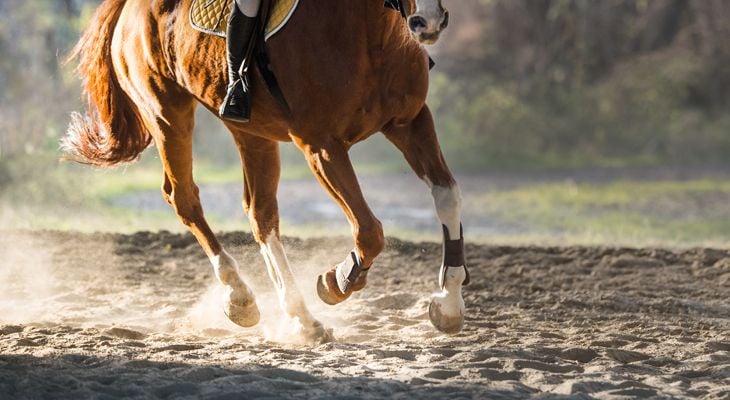
horse galloping
Ringbone is a lameness condition that affects the pastern and coffin joints in horses. This is a degenerative disease that continues to worsen over time. The right treatment and ongoing management, though, can slow the progression of the condition.

Types of Ringbone

Ringbone causes an enlargement around the affected joint. There are two types: low ringbone affects the coffin joint and high ringbone, which is more common, affects the pastern joint. Ringbone is similar to arthritis, with the growth of additional bone and a gradual breakdown of the joint surface (degeneration).

Ringbone can also be characterized by which part of the joint it affects:

  • Articular ringbone affects the lining (synovium) and cartilage of the joint. This causes pain, stiffness and enlargement of the joint.
  • Periarticular ringbone affects the soft tissues near the joint, such as the joint capsules and ligaments. If these structures become inflamed — such as from trauma, a deep cut or excess strain — they can stimulate the growth of bone in the joint.

Diagnosis of Ringbone

One of the first symptoms of ringbone is lameness that comes and goes. This usually doesn’t happen until around 15 years of age. The tissues around the joint can also be painful or soft. Over time, the pain will go away, and the area will become cool and firm.

An equine veterinarian can diagnose this condition based on a history of the horse’s symptoms and the results of a lameness examination. This includes checking the appearance and movement of the joint. X-rays may also be taken to provide an image of the joint.

Treatment of Ringbone

Treatment options for ringbone include:

  • Rest. Ringbone will usually continue to worsen if the horse works at the same pace.
  • Weight management. When horses are overweight, extra stress is added to their feet, legs and joints, which can worsen the condition.
  • Medications. The type of drug used depends upon how far along the condition is and may include phenylbutazone (“bute”) or a joint injection with hyaluronic acid or steroids.
  • Shoe adjustments. Sometimes, good shoeing can reduce the pain associated with ringbone. Likewise, a poor shoeing regimen may worsen this condition.
  • Surgery. If the ringbone involves mainly the pastern joint, this joint can be immobilized (fusion) with surgery to reduce the pain and the breakdown of the joint.

If your horse is exhibiting signs of ringbone or you notice a change in his or her health, contact us today, so we can schedule an exam and provide appropriate treatment options.

  • Pet Health
    • Chronic Conditions
    • Digestive and Oral Health
    • Diseases and Viruses
    • Pests and Parasites
    • Orthopedics
  • Today's Veterinarian
  • Choosing Your Pet
    • Finding Your Pet
    • Cats
    • Dogs
    • Horses
    • Exotics
      • Amphibians
      • Birds
      • Reptiles
        • Lizards
        • Turtles
    • Small Mammals
      • Ferrets
      • Rabbits
      • Domesticated Animals
        • Prairie Dogs
      • Pocket Pets
        • Chinchillas
        • Guinea Pigs
        • Hamsters
        • Hedgehogs
        • Rats
    • Livestock
      • Cows
      • Donkeys, Horses & Mules
      • Goats
      • Pigs
      • Poultry
      • Sheep
  • Living With Your Pet
    • Bringing Your Pet Home
    • Children and Pets
    • Providing Care
    • Travel
    • Saying Goodbye
  • Newsletter Library
    • Cats
    • Tips for Pet Owners
    • Behavior & Training
    • Fleas & Parasites
    • Keeping Pets Healthy
    • Equine
    • Recognizing Illness
    • Nutrition & Food
    • Pet Dangers
    • Seasonal Topics
    • Visiting the Vet
    • Newsletter Archive
      • Fun with Pets
      • Unbelievable Pets
  • Video Newsroom
    • Health Topics
    • Technology and Science
    • Other Interests
  • Newsletter Library
  • Client Survey
  • Pets4Kids
  • Equine

NEW PATIENTS RECEIVE $20 OFF FIRST EXAM

Fill out and submit information below to print offer

Office Hours

Main Office

Monday:

7:00 am-6:00 pm

Tuesday:

7:00 am-6:00 pm

Wednesday:

7:00 am-6:00 pm

Thursday:

7:00 am-6:00 pm

Friday:

7:00 am-6:00 pm

Saturday:

Closed

Sunday:

Closed

Our Locations

new

new
  • Copyright © 2026 MH Sub I, LLC dba iMatrix.
  • Admin Log In